


 Contact
 Log in
Executive Insights
2026 Mid-Year Multifamily Outlook: As Supply Eases, Opportunities Emerge
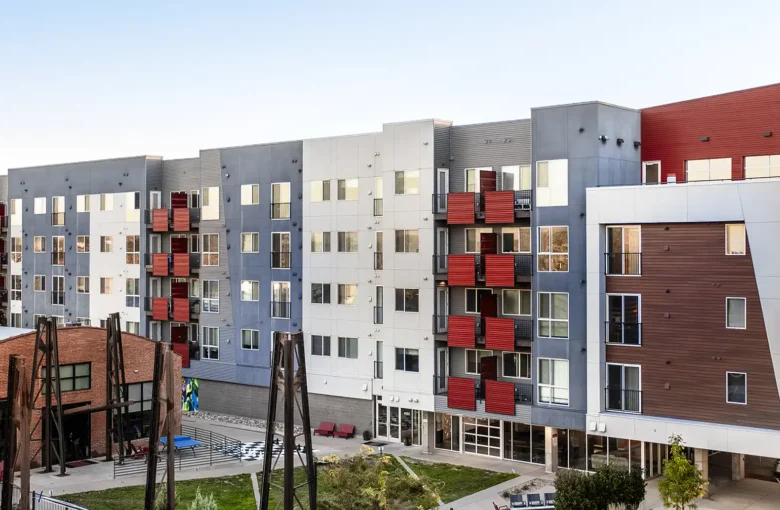
At the beginning of the year, we predicted that 2026 would be a year of meaningful progress for the apartment industry and for Hamilton Zanze. Now that we are halfway through the year, that outlook remains intact, even as geopolitical conflict, market volatility and uncertainty around interest rates have created new challenges.
Transaction activity during the first half was slower than anticipated, as geopolitical risk caused many investors to move to the sidelines and many owners had little incentive to sell. Operationally, however, the year has played out largely as we expected. Occupancy levels are increasing across the portfolio, and apartment fundamentals continue to move in the right direction.
Supply and Demand Come Back Into Balance
In January, we discussed the sharp decline in multifamily construction starts and our expectation that supply-demand fundamentals would begin improving during the second half of 2026. That shift is now evident, particularly through increasing occupancy levels across the portfolio. Hamilton Zanze’s portfolio occupancy has increased from approximately 91.8% in January to 93.7% in June. By mid-2027, we expect most of the excess supply to be absorbed, setting the stage for meaningful revenue growth across the portfolio.
While we do not anticipate top-line rent growth across the portfolio over the next 18 months, we expect to see an increase in net effective rent driven by higher occupancy. As occupancy stabilizes, operators can reduce concessions and bad debt, leading to stronger effective gross income.
We are also encouraged by the overall health of the renter base. The REIT industry average rent-to-income ratio sits at approximately 22%, suggesting residents are employed, financially stable and able to pay rent. While inflation and other consumer pressures remain concerns, this low rent-to-income ratio gives us confidence that residents are well-positioned as market conditions continue to improve.
We are seeing that health reflected in our own portfolio as well. Same-store bad debt, which tracks uncollected rent, unrecovered concessions and unpaid move-out charges, decreased by approximately 10% across Q4 2025 and Q1 2026 compared to a year prior. These metrics are meaningful indicators of improving resident financial health and portfolio performance.
The markets showing the strongest recovery are those that were not oversupplied. San Francisco, the broader Bay Area and Kansas City are all demonstrating improving occupancy trends.
By contrast, the markets that are still working through excess supply continue to face challenges. Maintaining occupancy levels while competing against an unprecedented wave of new supply has been the defining challenge of the past three years.
New construction starts have declined sharply, and the units currently being delivered represent the last of the recent supply wave. As a result, we expect absorption to remain strong.
Debt Markets Reopen, Activity Follows
Across the industry, transaction activity remained muted during the first half of the year, but conditions are improving rapidly, with debt availability leading the way.
For Hamilton Zanze, we closed approximately $140 million of acquisitions during the first half of 2026, which was slower volume than we anticipated. We currently have approximately $650 million of real estate in negotiations or under contract, expected to close in the second half of the year, and we believe we will do substantially more than that.
We see compelling opportunities in the distressed segment, and we will be working with institutional partners on large acquisitions, portfolio acquisitions and note purchases. Some sellers have simply decided it is time to move on, and we expect meaningful portfolio acquisition opportunities to surface as a result.
Fannie Mae and Freddie Mac have each increased their multifamily loan purchase caps to $88 billion, up from $73 billion in 2025, insurance companies are actively deploying capital, the CMBS market is open, and debt funds are heavily supplied. As debt providers compete for deployment opportunities, spreads continue to compress. We can borrow at approximately 5%, with a going-in cap rate of approximately 5.5%, creating positive leverage.
We are also seeing lenders mark their books to current market values. As a result, lenders now have a clearer understanding of where values stand, which is helping narrow the gap between buyer and seller expectations and creating opportunities both off-market and on-market.
At the same time, 1031 exchange activity continues to strengthen. The 1031 exchange remains an important pillar of our business, and we are encouraged by what we’re seeing. Banks are healthy and lending again, creating more transaction activity among property owners. We are receiving a measurable increase in inquiries from investors with exchange capital looking for a home.
Debt is abundant, institutional equity is ready to deploy, and 1031 exchange capital is actively seeking a home. That combination drives more transaction activity and ultimately compresses cap rates, increasing the value of the assets. Hamilton Zanze partners and employees invest in every asset in our portfolio, ensuring our interests are aligned with those of our investors.
HZ Evergreen Fund: Building Scale
Since its launch, the HZ Evergreen Fund has grown steadily, and that momentum is accelerating.
We continue to onboard existing Hamilton Zanze assets into the Fund and are receiving strong feedback from investors, including interest in accelerating the pace of asset contributions. We are also hearing from owners of apartment buildings interested in contributing their properties into the Fund through our 721 exchange platform. We believe this is a compelling area of growth for the Fund.
We reached a meaningful milestone at the end of June with the contribution of our tenth property, and we anticipate contributing two additional properties in Q3. We are also planning to open a limited direct cash investment opportunity into the Fund in September.
HZ Capital Partners Fund II Launch
We have officially launched fundraising for HZ Capital Partners Fund II (“GP Fund II”), and the response from investors has been strong. Private investors, family offices and RIAs are actively seeking multifamily investments that offer discounted pricing, high IRR-based returns and the ability to participate in the general partner’s position. GP Fund I raised $53 million, exceeding our target, and we expect GP Fund II to raise more than twice that amount.
Revere Housing and San Francisco
The progress at Revere Housing has been significant. At the peak, Revere Housing owned approximately 3,700 apartment units across 170 properties in San Francisco through note purchases and joint ventures, and we have already sold a number of those assets.
During the first half of the year, we completed deed-in-lieu transactions on two note portfolios, closing on fee-simple ownership of those assets, and we continue to pursue additional note acquisitions and opportunistic returns in San Francisco.
The fundamentals in San Francisco remain compelling. The city is leading the nation in rental rate growth. There is no new apartment construction underway, it remains undersupplied for housing, and we are seeing meaningful migration driven by job creation, particularly in technology and the AI sector.
Operations: Occupancy Gains Momentum
Our methodical approach to operations continues to produce results. Occupancy has strengthened across the portfolio, and we anticipate our portfolio-wide occupancy level will surpass 94% in the coming months. In our stronger markets, we are beginning to pull back on concessions and push on new lease pricing.
We are watching inflation closely, particularly its potential impact on the costs of goods, labor and capital expenditures. In markets like Phoenix, Colorado and Texas, the pace of new supply outpaced the available pool of qualified property managers, creating a labor shortage and upward pressure on costs. Phoenix alone has added approximately 100,000 units since 2022, roughly a quarter of its entire apartment stock. It is not a universal dynamic, but it is a meaningful one in those oversupplied markets.
Insurance: Premiums Decline for the Second Straight Year
For the second consecutive year, we delivered meaningful insurance premium reductions across the portfolio. The 19% reduction we projected at the start of the year came through as expected. These results are a direct reflection of our proactive approach to risk management and the long-term relationships we have built with our insurance partners across London, Bermuda and the domestic markets.
25 Years and Looking Forward
This year marks our 25th anniversary, a milestone that Mark, Tony and I never thought much about in the early 2000s when we were putting this together. It is worthy of celebration, and worthy of recognizing the partners and investors who have built this company alongside us. The friendships formed over the past 25 years are something we hold in high regard.
For investors, the past three to four years have been challenging. Distributions have been lower, and valuations have declined. But the fundamentals are moving in the right direction, and the trajectory is exactly what we expected to see. As supply and demand find their balance, we believe apartments offer what traditional stocks and bonds often cannot: relatively predictable cash flow and a partial hedge against inflation, grounded in intrinsic value and replacement cost.
The foundation for the second half of 2026 is solid. Occupancy is increasing, supply is declining and capital is returning to the market. We bought more than most groups in 2024 and 2025, and we did so deliberately. We move when competition is limited and value is clear. We carry no significant loan maturities across the portfolio, which means we are not forced into selling at reduced valuations and can remain patient and opportunistic.
As we look ahead, we will stay true to what has guided us from the beginning: putting investors first, maintaining accessibility and focusing on fundamentals. We have the right people in place, and we are grateful for the opportunity to invest alongside you. We look forward to building on this foundation for the next 25 years and beyond.

Kurt Houtkooper
CEO



Four paths forward, and why the tax code matters more than you think.
Read
You have been a good steward of your real estate. The question is whether the real estate is still a good steward of your time.
Read
Passing wealth to the next generation shouldn't be complicated. The Fund's structure makes it simple with divisible ownership, built-in liquidity, professional management, and tax advantages for your heirs.
Read